Local life · Victoria, British Columbia
Published
A blocked storm drain in Victoria: what you can clear and when to call
Call Victoria Public Works at 250-361-0400 at any time to report flooding. If it is safe, an adult can remove surface leaves from the curb with a rake or broom. Do not lift a grate, enter traffic or reach into a drain. Leave hazards and uncertain blockages to crews.
Facts checked
In this story
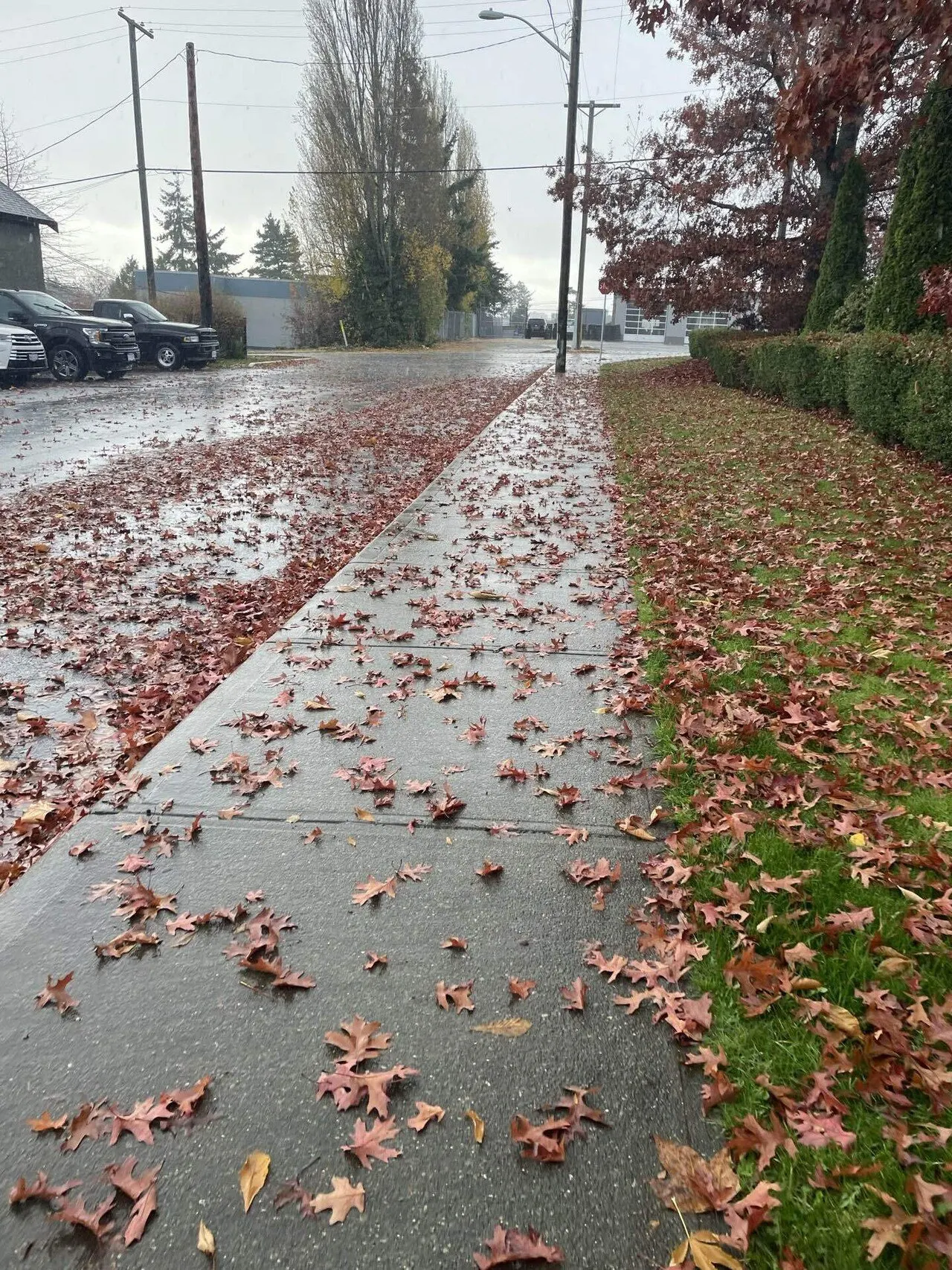
Know when a quick sweep is enough
A few leaves on the top of a safe curbside drain may need only a rake or broom. Water that keeps pooling after the surface is clear needs a call to Public Works. Decide from a safe place: the small useful task is clearing the top, not lifting a grate or finding out what is inside.
Source: Flood Prevention | City of Victoria
Leaves on the surface are different from a drain problem
The City says autumn leaves can block storm drains and cause roads or properties to flood. Its advice is to keep leaves and debris away and, where safe, use a rake or broom to clear the top. Clear from the curbside rather than standing in the street. A simple surface clearing can help water reach the drain.
Stop if the cause is uncertain or the drain will not clear. Call Public Works at 250-361-0400. The line is available 24 hours. Do not lift heavy grates or handle garbage or hazards inside the drain. Standing water can hide sharp objects and slippery ground.
Source: Flood Prevention | City of Victoria
Keep prevention separate from emergency work
Store leaf piles away from places where runoff could wash them into drains. Keep children supervised if present and do not ask them to clear a road drain. A blocked drain in the middle of the road is a crew task, not a reason to step into moving traffic.
The upside is a small action that can help when the problem is only surface leaves. The limit is equally important: clearing a few leaves is not proof that a drainage system is sound. Give the City the location and what you can see from a safe place. Storm drains lead to waterways, so never tip oil, paint thinner or other hazardous waste into them.
Source: Flood Prevention | City of Victoria
A small autumn job with a clear stopping point
In an October 2024 Victoria rainy-weekend discussion, some people looked forward to indoor hobbies while others watched power outages or water levels. That is a useful reminder to do a quick practical check before settling in. It does not mean residents should attempt repairs during a storm.
Source: Victoria: How’s everyone spending this rainy weekend?
Older advice contains both a good idea and a risky extra step
A December 2025 local flood-warning discussion had a practical question: how do you clear a drain? Many replies recommended removing leaves and moving them away from water flow. Others suggested poking into a grate or lifting it. Follow the City’s narrower advice. Clear surface debris only where it is safe, stay at the curb and leave heavy grates and internal hazards to crews. The old thread’s weather warning is not a forecast for this week.
The November 2025 leaf debate also showed why location matters. Some people wanted leaves left in garden beds, while others described slippery paths and water backing up. You do not have to clear every leaf from every garden to keep a walking route and nearby drain clear. The useful task is to stop surface material from collecting where people or water need to pass.
Source: Take the flood warnings seriously
Source: Why cannot we leave the leaves?
Source: Flood Prevention | City of Victoria
What to tell Public Works
Give the nearest street address or intersection and say what is visible from a safe position. For example, describe leaves covering the top of a curbside grate, water still pooling after the top is clear, or water approaching a property. Those observations help explain the problem without guessing at a broken pipe or trying to diagnose it yourself. If the cause is uncertain, the City says to call.
Victoria says crews maintain about 5,700 storm drains. A few leaves on a safe curbside grate can be a small prevention job, but water that keeps rising needs a report. Move cleared leaves far enough from the runoff path that the next rain does not return them to the same place. Keep the phone number handy before the storm, so the next step is clear if a quick surface sweep does not help.
Source: Flood Prevention | City of Victoria
Source: Victoria: How’s everyone spending this rainy weekend?
Questions people ask
What number reports flooding in Victoria?
250-361-0400.
Source: Flood Prevention | City of Victoria
Is that line available at night?
Yes. It is a twenty-four-hour Public Works line.
Source: Flood Prevention | City of Victoria
Why are leaves a fall concern?
They can block drains and cause roads or properties to flood.
Source: Flood Prevention | City of Victoria
What tool does the City suggest for surface leaves?
A rake or broom.
Source: Flood Prevention | City of Victoria
Should I stand in the street to clear a drain?
No. Work from the curb only when safe.
Source: Flood Prevention | City of Victoria
Should I lift the grate?
No.
Source: Flood Prevention | City of Victoria
Should I reach inside for garbage?
No. Let crews handle hazards in the drain.
Source: Flood Prevention | City of Victoria
What if water does not clear?
Call Public Works.
Source: Flood Prevention | City of Victoria
Can children clear drains alone?
No. The City says children present must be supervised by adults.
Source: Flood Prevention | City of Victoria
Can oil or paint thinner go into the storm drain?
No. Storm drains lead to waterways.
Something changed? Tell us about a correction.